

Molar Incisor Hypomineralisation (MIH)
Hypomineralisation is a condition that affects the enamel (the outermost layer of the tooth) making it softer and more prone to damage. This condition develops during tooth formation, typically either in utero or within the first two years of life. There are several factors that may contribute to this, including illnesses during pregnancy and early childhood illnesses such as high fevers or respiratory issues. Up to 20% of the UK population is affected by some form of hypomineralisation, and there is likely a genetic predisposition.
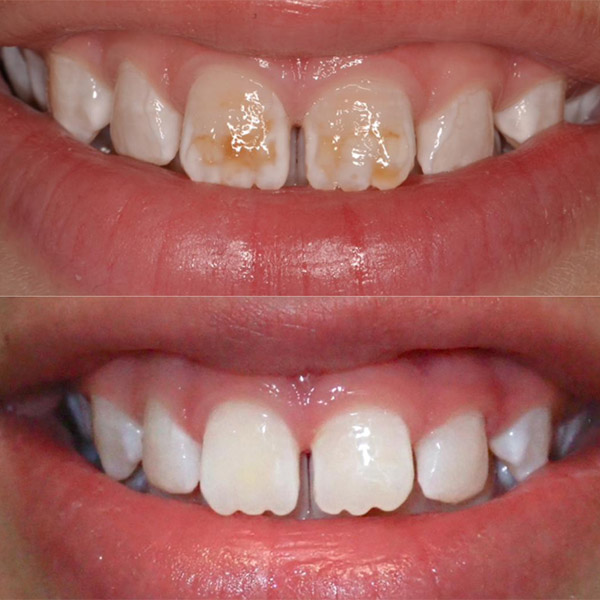
Teeth affected by hypomineralisation are more sensitive, prone to decay, and may show discolouration such as chalky white, yellow, or brown patches. They can also be more challenging to treat, as the weakened enamel often doesn’t allow fillings to stick as well, and these teeth can be harder to numb with local anaesthesia.
What is Molar Incisor Hypomineralisation (MIH)?
MIH is a specific type of hypomineralisation that affects the first permanent molars (the large back teeth) and sometimes the incisors (the front teeth). The enamel in these teeth forms abnormally, leading to weakened structures that are more susceptible to decay, sensitivity, and even breakage under biting forces.
Signs of MIH Include:
- White, yellow, or brown discolouration on affected teeth
- Enamel that appears thin, translucent, or brittle
- Teeth that chip or break easily


Which Teeth Are Affected?
- Primary Teeth (Milk Teeth): The second primary molars are most commonly affected. Hypomineralisation in baby teeth is usually an indicator of similar issues in the permanent teeth.
- Permanent Teeth: The first molars and sometimes the incisors are typically affected. The molars may experience severe breakdown, while the incisors are usually less compromised, leading primarily to aesthetic concerns.
Challenges in Treating Hypomineralised Teeth
Managing hypomineralisation, particularly MIH, can be complex due to:
- Increased sensitivity and rapid decay
- Difficulty achieving effective anaesthesia
- Challenges with the durability of fillings and restorations
- The need for multiple visits to manage treatment comfortably for the child
MIH Treatment Options
Treatment depends on the severity of the condition and your child’s specific symptoms. Options may include:
Preventive Measures
- Fluoride varnish or remineralising agents to strengthen enamel and reduce sensitivity.
- Fissure sealants to protect molars from decay.
Restorative Treatments
- White fillings may be used for milder cases but are less durable on hypomineralised enamel.
- Preformed metal crowns for primary molars to seal the tooth and protect it until natural exfoliation.
- Composite restorations, crowns, or even extraction for severely affected permanent molars.
Aesthetic Treatments
- Options such as microabrasion, resin infiltration, or bleaching may be used to address discolouration in permanent incisors.
Interceptive Extraction
- For severely affected permanent molars, planned extraction in consultation with an orthodontist may be considered to ensure optimal alignment and space for remaining teeth.
We’re Here to Help
If you notice any signs of hypomineralisation or have concerns about your child’s teeth, contact us to schedule an assessment.
With tailored care and a proactive approach, we aim to keep your child pain-free and happy.
Highly Rated with Excellent Customer Feedback
We are proud to have earned a growing number of 5-star reviews on Google, reflecting the care and expertise of our paediatric dental team in Glasgow.
